Ask a supplier about a project it supported last spring, and it might tell you how the match helped a youth club reopen a room or enabled a food bank to offer an extra evening of service.
A business can produce the date, the hours contributed and a few photographs from a match.
Hours and materials are easy to log. Understanding what changed for the people involved takes a conversation.
This gap becomes a problem when your team needs evidence for a tender or contract report months later. Your records may show what you delivered, but not always why it mattered. The details that could turn a completed project into a compelling example often remain with the people who experienced it.
The solution is to record the outcome alongside the activity, while the details are still fresh.

What a useful project record includes
Start with the need. Where possible, use the community organisation’s own words to explain the problem and why support was needed. “Repaired a room” tells the reader what happened. “Repaired the room the youth club had been unable to use since the spring floods” explains why the work mattered.
Next, record your contribution. Be specific about what you agreed to provide, what your team delivered and who else was involved. If other suppliers or volunteers contributed, make sure their work is recognised too.
Then ask the community organisation what changed as a result. It understands its own needs and is best placed to explain how the support helped. Its feedback provides a stronger basis for describing the outcome than a claim written solely from your own perspective.
Before finalising the record, check that you have permission to use the organisation’s name, feedback or photographs in bids and public communications. If the longer-term outcome is not yet clear, record what has been completed and arrange to follow up. It is better to report a modest, evidenced result than to overstate the impact.
For each project, keep four things together:
- The need: Who needed support, and what problem were they trying to solve?
- Your contribution: What did you commit to and deliver? Who else helped?
- The outcome: What does the community organisation say changed as a result?
- The evidence: What figures, feedback, photographs or other records support the account, and what permissions have been agreed?
Make the evidence useful beyond the project
Project records are often used by people who were not involved in delivering the work. In a team operating across several authorities, the person who managed a community partnership may never meet the colleague preparing the next bid.
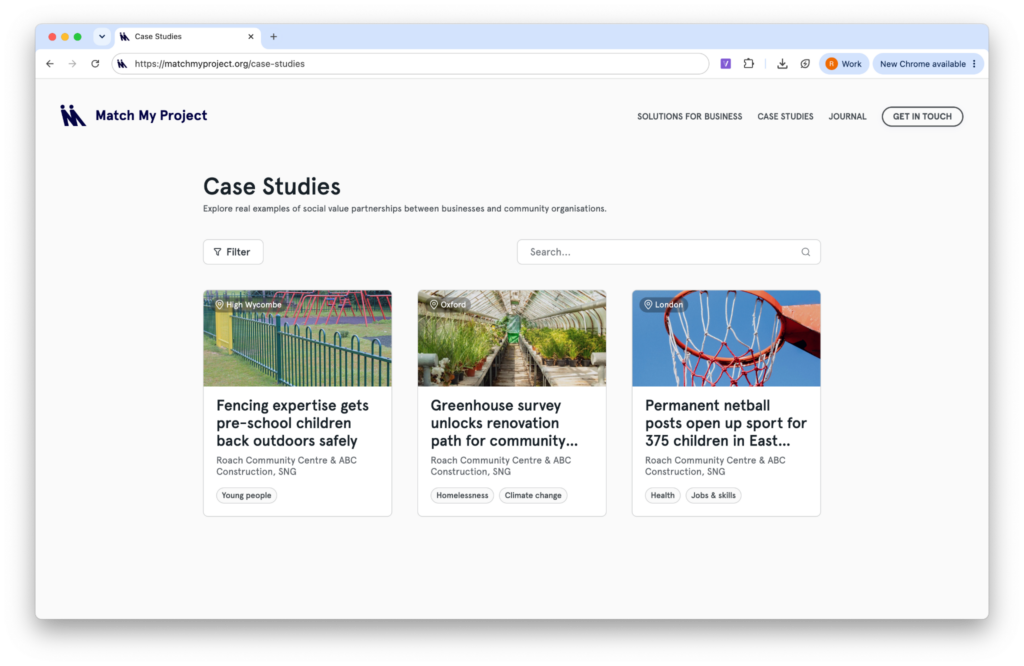
A clear record gives that colleague the context they need without relying on someone’s memory or searching through emails for missing information. It also helps preserve knowledge when responsibilities change.
This is particularly useful when preparing tenders and contract reports. Buyers have different Social Value requirements, so a single project record will not answer every question. However, a collection of well-documented examples gives your team credible evidence to draw on, adapt to specific requirements and substantiate with supporting information.
Over time, these records can also help you understand the value of your activity across different communities, identify recurring needs and recognise which types of support are making a difference.
Putting your project records to work
If you have completed projects through Match My Project, some of the information you need may already be available on the platform, including feedback from the community organisation.
From January, new supplier tools are planned to help you make better use of these records:
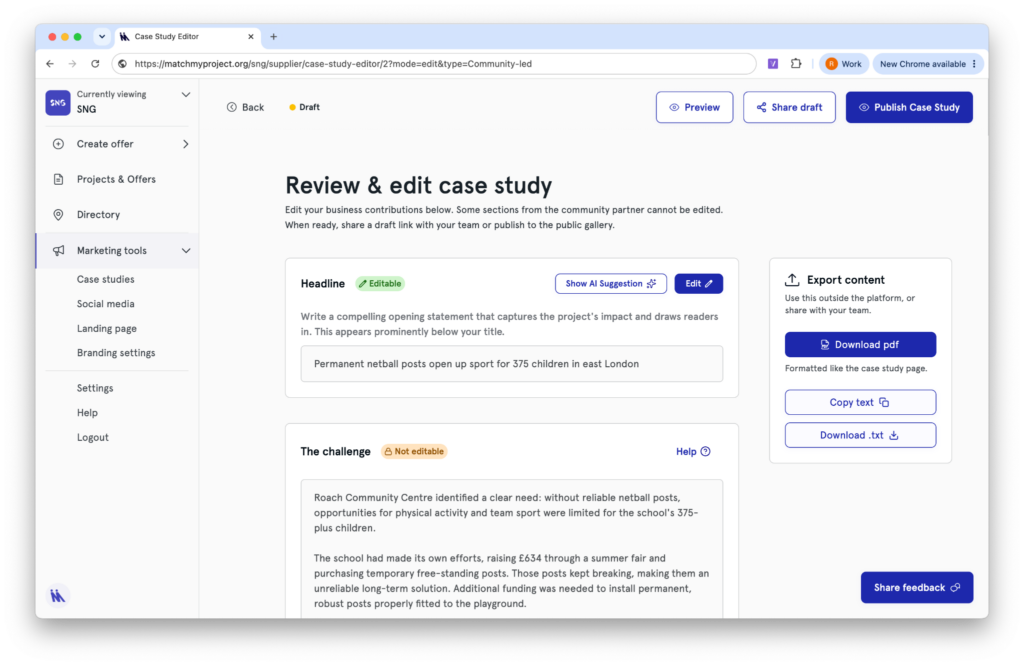
- Case-study drafts: Use project information and community feedback as a starting point, then review and edit the draft before sharing it.
- A landing page: Bring selected case studies together in one place to share with buyers and colleagues.
- An activity dashboard: Track projects and outstanding actions across the authorities you work with.
- LinkedIn post drafts: Share completed partnerships publicly while giving the community organisation appropriate credit.
- Team roles: Give colleagues admin or observer access and assign them to the authorities they cover.
- Joint offers: Work with other suppliers when a community project needs different skills or resources.
These tools are intended to make it easier to organise and use the information you already have. The quality of the evidence will still depend on capturing the need, contribution and outcome accurately.
Start with your next completed project
You do not need to wait for the new tools to improve your records. After your next project, ask the community organisation what difference the support made, record its response and keep the supporting evidence together.
You could also revisit one or two recent projects while the people involved can still remember the details. That will give your team a useful starting point for future bids, contract reports and case studies.
Good Social Value evidence starts with the work itself, but it becomes useful when you can show what changed, who benefited and how you know.
We’ll share more about the new Match My Project supplier tools, including plans and pricing, in November.